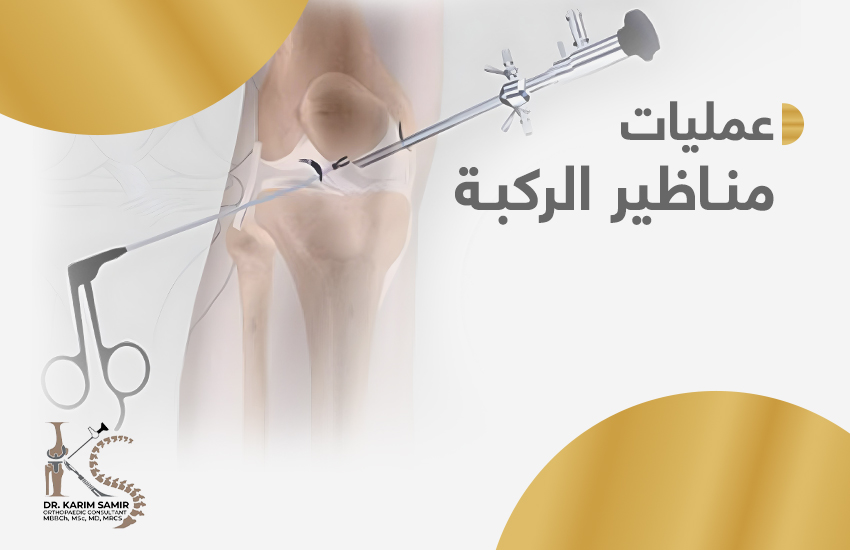
Knee arthroscopy is a minimally invasive surgical procedure used to diagnose and treat knee joint problems through very small incisions (5-10 mm) instead of traditional open surgery.
Arthroscopy lets the surgeon see inside the joint in high clarity through a tiny camera, and use specialized surgical instruments to repair damaged tissue without opening the joint completely. This means:
- Less pain after surgery compared with open surgery
- Faster healing and an earlier return to daily activities
- Smaller, less noticeable scars
- Lower risk of complications and infection
- A shorter hospital stay (usually the same day)
More than one million knee arthroscopies are performed worldwide every year, making it one of the most common orthopedic surgical procedures.
When Do You Need Knee Arthroscopy?
Doctors recommend knee arthroscopy when conservative treatments (medication, physical therapy, rest) fail to improve symptoms, or when there are clear injuries that require surgical intervention.
Common conditions treated with arthroscopy:
The most common reason for arthroscopy. The meniscus acts as a shock-absorbing cushion; when it tears it causes pain, stiffness and sometimes "locking" of the joint.
A common injury in athletes. The anterior cruciate ligament (ACL) or posterior cruciate ligament (PCL) can be reconstructed using arthroscopy.
Early to moderate knee osteoarthritis, where damaged cartilage can be cleaned and the joint surface smoothed.
Small pieces of bone or cartilage floating inside the joint that cause sudden pain and locking of the knee.
Inflammation of the inner lining of the joint, where the inflamed, thickened tissue can be removed.
In some cases, simple fractures inside the joint can be repaired with arthroscopy.
Symptoms that call for a doctor's visit:
- Persistent pain in the knee that doesn't improve with rest or medication
- Recurrent swelling, especially after physical activity
- Stiffness and difficulty fully bending or straightening the knee
- A feeling of instability or the knee "giving way"
- Painful clicking or popping with movement
- Joint "locking" - being unable to fully straighten the knee
If the pain is accompanied by fever, severe redness or heat in the joint, see a doctor immediately to rule out infection.
Types of Procedures Performed by Arthroscopy
Several different operations can be performed through arthroscopy, and your surgeon may combine more than one procedure in the same operation depending on your condition:
| Procedure | Description | Expected Recovery Time |
|---|---|---|
| Partial Meniscectomy | Removing the damaged part of the meniscus | 4-6 weeks |
| Meniscus Repair (Suturing) | Repairing the tear with stitches (preferred for recent tears) | 3-4 months |
| ACL Reconstruction | Replacing the torn ligament with a graft from another tendon | 6-9 months |
| Joint Debridement | Removing damaged tissue and bone spurs | 2-4 weeks |
| Microfracture | Stimulating new cartilage growth in worn areas | 4-6 months |
| Synovial Plica Removal | Removing excess tissue from the joint lining | 2-3 weeks |
The type of procedure determines your recovery time and the restrictions after surgery. Simple procedures such as debridement allow a faster return to activity, while complex repairs such as meniscus suturing need longer protection to allow healing.
Preparing for Surgery
Good preparation before surgery increases the chances of success and reduces complications. Here is what you need to know:
Required tests:
- Clinical examination - a full assessment of the knee and stability tests
- X-ray - to assess the bones and rule out fractures and severe arthritis
- MRI - to see the soft tissues: ligaments, cartilage and tendons
- Pre-operative labs - complete blood count, coagulation tests, and kidney and liver function as needed
Important pre-surgery instructions:
- Stop blood thinners (such as aspirin) 7-10 days before, as directed by your doctor
- Tell your doctor about all medications, supplements and herbs you take
- Do not stop blood pressure or diabetes medication unless your doctor tells you to
- Fast from food for 6-8 hours before surgery
- Fast from clear liquids for 2-4 hours
- Avoid smoking completely for at least two weeks
- Set up your bedroom on the ground floor if possible
- Get crutches or a walker
- Have ice packs and pillows ready to elevate your leg
- Prepare loose, easy-to-wear clothing
- Arrange for someone to stay with you for 24-48 hours after surgery
- Do not drive for at least a week
- Arrange sick leave from work in advance
- ✓ Shower with antiseptic soap the night before and the morning of surgery
- ✓ Remove nail polish, jewelry and contact lenses
- ✓ Wear comfortable, loose clothing
- ✓ Bring all medical papers and lab results
- ✓ Arrive at the hospital two hours before your appointment
Surgery Steps
Understanding what will happen during the operation helps reduce anxiety. Here are the steps in detail:
1️⃣ Preparation in the operating room
- The patient is positioned on the operating table (usually on the back with the knee bent)
- A compression tourniquet is placed on the upper thigh to reduce bleeding
- The skin is sterilized with antiseptic solution and covered with sterile drapes
2️⃣ Inserting the arthroscope
- The surgeon makes two or three small incisions (5-10 mm) around the knee
- The arthroscope (a tiny camera) is inserted through one of the incisions
- The joint is filled with sterile fluid (saline) to expand the space and improve visibility
- The image is displayed on a high-definition screen
3️⃣ Examination and diagnosis
- The surgeon carefully inspects all parts of the joint: the meniscus, ligaments and articular cartilage
- Any damage or problem found is documented
- The appropriate procedure is decided based on the findings
4️⃣ Surgical repair
- Fine surgical instruments are inserted through the other incisions
- The required repair is performed: trimming, suturing or cleaning, depending on the case
- Advanced tools are used, such as micro-scissors, graspers and electrocautery devices
5️⃣ Closing
- The fluid is drained from the joint
- The instruments and arthroscope are removed
- The incisions are closed with cosmetic stitches or medical adhesive
- A compression dressing is applied to reduce swelling
30-90 minutes depending on the procedure. Simple procedures (cleaning, loose body removal) take 30-45 minutes, while complex repairs (meniscus suturing, ligament reconstruction) can take up to 90 minutes.
Types of Anesthesia Used
The choice of anesthesia depends on several factors: the type of procedure, its duration, your health, and your personal preferences.
| Type of Anesthesia | Description | Advantages | Use |
|---|---|---|---|
| General Anesthesia | You are fully asleep and feel nothing | • Complete comfort • Suitable for all procedures • No memory of the surgery |
Most common |
| Spinal Anesthesia | An injection in the lower back that numbs the lower half of the body | • Awake but pain-free • Faster recovery • Fewer side effects |
Also common |
| Nerve Block | Local anesthesia of the leg nerves | • Extended pain relief after surgery • Often added to general anesthesia • Reduces the need for painkillers |
Supplementary |
Most modern surgical centers use general anesthesia + a nerve block for the best results: complete comfort during surgery and excellent pain relief afterward.
Advances in anesthesia and pain management have made knee arthroscopy far less painful than in the past. Most patients need only simple painkillers for a few days.
Recovery and Rehabilitation After Surgery
A proper recovery program is the key to success. Your commitment to the instructions and exercises determines the outcome of the surgery more than the surgery itself.
Recovery timeline:
- Complete rest with the leg elevated above heart level
- Ice for 15-20 minutes every 2-3 hours
- Compression with the elastic bandage
- Painkillers regularly as prescribed
- Simple front-thigh (quadriceps) activation exercises
- Walking with crutches as tolerated
- Starting gentle range-of-motion exercises
- Light muscle-strengthening exercises
- Doctor's visit to check the wound
- Continuing ice and elevation
- Gradual increase in movement and exercise
- Starting regular physical therapy
- Walking without crutches (for simple procedures)
- Riding a stationary bike without resistance
- Returning to office work
- Advanced strengthening exercises
- Balance and stability exercises
- Swimming and advanced walking
- Sport-specific training
- Return-to-sport assessment
Basic exercise program:
- Quadriceps set: Lie on your back, tighten the front thigh muscle and press the knee downward, hold for 5 seconds × 20 repetitions
- Straight leg raise: Lift the affected leg 15-20 cm and hold for 5 seconds × 10-15 repetitions
- Knee bending: Sit and slide your heel toward you to bend the knee as far as you can, repeat 10 times
- Pillow squeeze: Place a pillow between your knees and squeeze it, hold for 5 seconds × 15 repetitions
- Fever above 38.5°C
- Severe redness or heat around the wound
- Yellow or green discharge from the wound
- Severe pain that doesn't improve with painkillers
- Sudden swelling in the leg or thigh
- Chest pain or difficulty breathing
Returning to different activities:
| Activity | Expected Time | Notes |
|---|---|---|
| Driving | 1-2 weeks | When you can safely perform an emergency stop |
| Office work | 5-10 days | With frequent rest breaks |
| Light physical work | 2-4 weeks | Gradually and without lifting weights |
| Heavy physical work | 6-12 weeks | Depending on the type of procedure |
| Normal walking | 1-3 weeks | For simple procedures |
| Swimming | 3-4 weeks | After the wounds have fully healed |
| Cycling | 2-4 weeks | Without high resistance |
| Running | 6-12 weeks | Gradually and with your therapist's approval |
| Contact sports | 3-6 months | After full strength and stability are restored |
* These are general approximate figures. The actual time varies depending on the type of procedure, your general health, and your commitment to rehabilitation. Always consult your surgeon.
Possible Complications and How to Avoid Them
Knee arthroscopy is a very safe procedure, but like any surgery, there are potential risks you should know about:
Common complications (usually mild):
- Pain and swelling: Completely normal and improves gradually within a week. Treated with ice, elevation and painkillers.
- Bruising: Appears around the wounds and the knee, and disappears within 1-2 weeks.
- Stiffness: May occur if you don't follow the range-of-motion exercises. Prevention: start exercising early.
Rare complications (occur in less than 1-2%):
Incidence: 0.1-0.4%
Prevention: strict sterilization, preventive antibiotics, wound care.
Incidence: 0.3-1%
Prevention: early movement, compression stockings, moving the foot regularly.
Incidence: 1-2%
Prevention: stopping blood thinners before surgery, precise surgical technique.
Incidence: less than 0.1%
Prevention: an expert surgeon and precise anatomical knowledge.
- Choose an experienced surgeon: one who performs hundreds of procedures a year
- Follow the pre-surgery instructions: especially stopping blood-thinning medication
- Maintain hygiene: shower with antiseptic soap before surgery
- Move early: move your foot and toes immediately after waking up
- Watch for signs of infection: check the wound daily
Success Rates and Expected Results
Success rates are very high when arthroscopy is performed for the right cases by an experienced surgeon:
| Procedure | Success Rate | Patient Satisfaction | Influencing Factors |
|---|---|---|---|
| Partial meniscectomy | 85-90% | Very high | Age, degree of tear, associated arthritis |
| Meniscus repair | 70-85% | Very good | Tear location, how recent the injury is, age |
| ACL reconstruction | 85-95% | Excellent | Commitment to rehabilitation, type of graft used |
| Joint debridement | 60-80% | Moderate to good | Degree of arthritis, accompanying procedure |
| Loose body removal | 90-95% | Excellent | Simple, with often immediate results |
Factors that increase the chance of success:
- Younger age: healing is better and faster under 40
- Healthy weight: less stress on the joint and longer-lasting results
- Not smoking: much better healing
- Activity before surgery: strong muscles = faster recovery
- Commitment to rehabilitation: the most important factor of all
- No severe arthritis: a relatively healthy joint improves more
- More than 80% of patients are very satisfied with the results
- 75-85% return to their usual sports within 3-6 months
- 90% report a noticeable improvement in quality of life
Cost of Knee Arthroscopy in Egypt 2025
The cost varies considerably depending on several factors. Here is a comprehensive overview to help you plan:
Average total cost:
EGP 15,000 - 45,000
Depending on the hospital, the surgeon's experience and the type of procedure
Cost breakdown:
| Item | Approximate Cost | Notes |
|---|---|---|
| Surgeon's fee | EGP 7,000 - 20,000 | Depending on experience and reputation |
| Anesthesia fee | EGP 3,000 - 7,000 | Depending on the type and duration of anesthesia |
| Operating room and supplies | EGP 4,000 - 12,000 | Arthroscopy consumables, blades, sutures |
| Hospital stay (usually one day) | EGP 1,000 - 4,000 | Depending on room type and hospital |
| Labs and imaging | EGP 500 - 2,000 | MRI, pre-operative tests |
| First follow-up | Free - EGP 500 | Often included in the surgeon's fee |
Possible additional costs:
- Physical therapy: EGP 300-600 per session × 8-20 sessions = EGP 2,400-12,000
- Medications: EGP 500-1,500 (painkillers, antibiotics, anti-swelling drugs)
- Knee braces: EGP 200-2,000 depending on the type
- Crutches: EGP 100-400
Factors affecting the cost:
- Public hospitals: lowest cost
- Health insurance hospitals: moderate
- Private hospitals: highest cost but better services
- Day-surgery centers: a good economical option
- Junior consultant: lower cost
- Experienced consultant: moderate
- Professor or international expert: highest
- Remember: experience reduces complications
- Simple cleaning: lowest
- Meniscectomy: moderate
- Meniscus repair: higher
- Ligament reconstruction: highest cost
- Cairo and Alexandria: higher
- Major governorates: moderate
- Smaller governorates: lower
- Ask for the all-inclusive total cost - not just the surgeon's fee
- Check your health insurance coverage, if you have any
- Don't always choose the cheapest - quality and experience matter more
- Ask about the follow-up policy and whether it is included
- Keep a budget for physical therapy - it is essential for success
Alternatives to Knee Arthroscopy
Arthroscopy is not always the only option. There are alternatives that may suit your condition:
1️⃣ Conservative (non-surgical) treatment
Always tried first before considering surgery:
- Physical therapy: strengthening the muscles and improving range of motion
- Medications: anti-inflammatories and painkillers (under medical guidance)
- Injections:
- Cortisone injections: to reduce inflammation (limited use)
- Hyaluronic acid injections: to improve joint lubrication
- Platelet-rich plasma (PRP): a promising newer treatment
- Lifestyle changes: losing weight, avoiding strenuous activity, temporarily using crutches
2️⃣ Open surgery
May be necessary in certain cases:
- Large, complex tears that cannot be repaired with arthroscopy
- Joint fractures that need internal fixation
- Realigning the leg axis (osteotomy)
- Partial or total joint replacement for severe arthritis
3️⃣ Knee replacement
The final option for severe, widespread arthritis:
- Partial replacement: when only one part of the joint is affected
- Total replacement: when the whole joint is affected
- Advanced arthritis spread across the whole joint (grade 4)
- Major bone deformities
- Severe joint instability that needs complex repair
- Failure of a previous arthroscopy for the same problem
- Unrealistic patient expectations
The final decision depends on a comprehensive assessment that includes: the degree of injury, your age, your activity level, your general health, and your expectations. Discuss all the options openly with your surgeon.
Frequently Asked Questions
Knee arthroscopy usually takes 30 to 90 minutes depending on the procedure required:
- Simple procedures (cleaning, loose body removal): 30-45 minutes
- Intermediate procedures (meniscectomy): 45-60 minutes
- Complex procedures (meniscus suturing, ligament reconstruction): 60-90 minutes
It depends on the nature of your work and the type of procedure:
- Office work: usually 5-10 days
- Jobs that require standing: 2-4 weeks
- Heavy physical work: 6-12 weeks
Consult your surgeon before returning to make sure you are ready.
Most patients feel mild to moderate pain after surgery that can be controlled with prescribed painkillers. The pain is:
- Much less than with open surgery
- Strongest in the first 24-48 hours, then improves gradually
- Responsive to ice, painkillers and leg elevation
Using a nerve block provides excellent pain relief for 12-24 hours after surgery.
The success rate is high and ranges from 75-95% depending on the problem:
- Simple meniscus tears: 85-90% success
- Removal of bone spurs: over 90%
- ACL reconstruction: 85-95%
Results depend heavily on following the rehabilitation program and the condition of the joint before surgery.
The total cost ranges from EGP 15,000 - 45,000 depending on:
- The type of procedure (simple or complex)
- The hospital (public, insurance, private)
- The surgeon's experience
- The type of anesthesia and length of stay
This usually includes the surgeon's fee, anesthesia, the operating room and the first follow-up. Physical therapy and medications may be extra.
Most knee arthroscopies are performed as "day surgery", where:
- You arrive on the morning of the surgery
- The surgery is performed
- You stay under observation for 2-4 hours
- You go home the same day
Only in very complex cases, or with other health problems, might you need to stay one night.
Yes, and it is actually recommended! Early movement is very important:
- You can walk with crutches on the same day as surgery
- Start with light steps and increase gradually
- Use two crutches for the first 2-7 days depending on pain and the procedure
- Movement reduces the risk of clots and improves healing
Just avoid putting full weight on the leg right away - progress according to your comfort.
You can drive when:
- You can perform an emergency stop safely and confidently
- You feel no pain when bending the knee or pressing the pedal
- You are not taking strong painkillers that affect concentration
This is usually after 1-2 weeks for the right knee, and sooner for the left knee. Consult your doctor before driving.
Yes, absolutely! Physical therapy is critical to the success of the surgery:
- It starts with simple home exercises from day one
- Then regular sessions with a specialized therapist
- Usually 8-20 sessions depending on the type of procedure
- It focuses on: restoring range of motion, strengthening muscles and improving balance
Commitment to rehabilitation is the most important factor in determining the long-term success of the surgery.
The timing varies depending on the sport and the type of procedure:
- Normal walking: 1-3 weeks
- Swimming and cycling: 3-4 weeks
- Light jogging: 6-12 weeks
- Contact sports (football, basketball): 3-6 months
Returning to sport is gradual and requires the approval of your surgeon and physical therapist after assessing strength and stability.

More than 15 years of experience in arthroscopic surgery and sports injuries. Has performed more than 3,000 successful knee arthroscopies. Member of the Egyptian Orthopaedic Association and the International Society for Arthroscopy.
This content was medically reviewed by a team of orthopedic and physical therapy specialists at Dr. Karim Samir's clinic. Last review: December 12, 2025. The content is updated regularly to ensure the accuracy of the information.
Video: A Detailed Explanation of Knee Arthroscopy
A video produced by the clinic that explains the steps of the surgery and recovery in a simple, visual way.
📚 Also read in the Knee Health series:
The information in this guide is intended for general health education only and never replaces direct medical consultation. Every case is unique and needs a personal evaluation by a specialist doctor. Do not make medical decisions based on this content alone. Always consult a specialist orthopedic surgeon before any procedure.